
10 Small Hallway Essentials for an Organized & Stylish Entry in 2026
The entranceway is the first impression guests have of your home, yet it’s often one of the most overlooked spaces when it comes to interior design.
For those with small entranceways, maximizing this limited space can be particularly challenging. However, with thoughtful design choices, smart storage solutions, and a touch of creativity, you can transform even the tiniest entryway into a functional and welcoming space.
Making the most of a small entranceway involves combining style and functionality. Essentials like hooks, shoe racks, and compact storage solutions help declutter the space while maintaining practicality.
Mirrors can enhance lighting and create an illusion of spaciousness, while decorative accents like rugs or plants add personality. Prioritizing organization and choosing multi-purpose furniture can turn even the smallest entryway into an inviting and efficient space.
In this article, we explore how to make the most of your small entranceway, offering practical tips, decor ideas, and design solutions that will help you create a stylish and organized entry space.
Table of Contents
First Impressions: Why Your Entrance Way Sets the Tone
The entranceway serves as a transition between the outside world and the comfort of your home.
It’s where you greet guests, drop your keys, and prepare to leave for the day. As the first area people see when they enter your home, it sets the tone for the rest of your living space.
A well-designed entranceway not only makes a good first impression but also enhances the overall functionality of your home.
What are the Key Functions of an Entranceway?
Welcoming Guests: A tidy and aesthetically pleasing entranceway creates a welcoming atmosphere for visitors.
Storage Solution: It’s a prime spot for storing everyday essentials like shoes, coats, and bags.
Transition Space: The entranceway acts as a buffer zone, helping to maintain cleanliness and order by keeping outdoor dirt and clutter from spreading through the house.
The Hallway Audit: How to Evaluate Your Small Space
Before diving into design ideas, it’s essential to assess the specific characteristics of your entranceway.
Consider the following:
Dimensions: Measure the length, width, and height of your entranceway to understand the available space.
Natural Light: Take note of the natural light coming into the space. Light can greatly affect how open or cramped a space feels.
Traffic Flow: Consider the flow of movement through your entranceway. Is it a busy passage for the entire household, or is it mainly used by guests?
Existing Features: Identify any existing architectural features such as windows, doors, or built-in storage, as these will influence your design choices.
The Entryway Essentials – Quick Comparison Table
| Item | Purpose | Space-Saving Level | Best For… |
| Floating Shelf | Keys, mail, and decor | ⭐⭐⭐⭐⭐ | Ultra-narrow halls |
| Wall-Mounted Hooks | Coats, bags, and hats | ⭐⭐⭐⭐⭐ | Vertical storage |
| Slim Console Table | Landing strip for items | ⭐⭐⭐ | Longer hallways |
| Storage Bench | Seating + shoe hidden storage | ⭐⭐⭐⭐ | High-traffic families |
| Over-the-Door Rack | Extra coat/bag space | ⭐⭐⭐⭐⭐ | Rental apartments |
| Full-Length Mirror | Checking outfit + light reflection | ⭐⭐⭐⭐ | Visual expansion |
The Hallway Edit: Must-Have Items for Small Entries
Slim Console Tables: The Ultimate Landing Strip
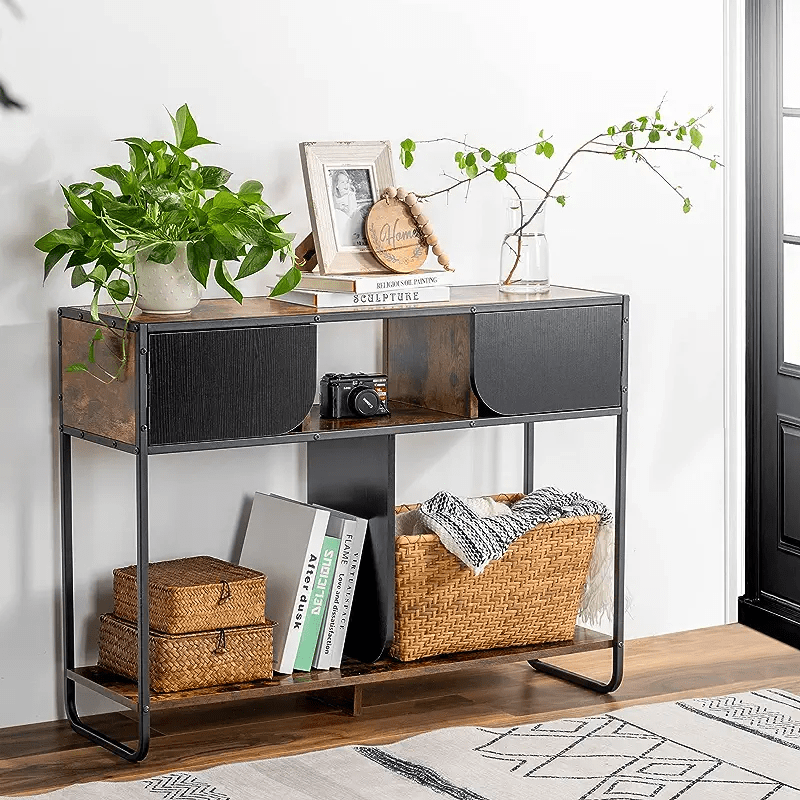
Start with a slim and stylish console table. This piece of furniture is both decorative and practical. It provides a surface for keys, mail, and other essentials, helping you stay organized.
Opt for a table with storage options like drawers or shelves to keep clutter at bay. Consider a design that complements your overall decor style.


Vertical Storage: Wall Hooks & Modular Racks
In a small entranceway, it’s vital to make the most of vertical space. Install wall hooks or a coat rack to keep coats, hats, scarves, and bags off the floor. This not only saves space but also keeps your entrance tidy and accessible.
Choose hooks or a rack that matches the style of your space, whether it’s modern, rustic, or traditional.


Decorative Mirrors: Style Meets Function
Mirrors can work wonders in small spaces. They create the illusion of more space and reflect natural light, brightening up the area. Select a mirror that complements your decor, whether it’s a decorative framed mirror or a sleek, frameless design.
Blob mirrors are also on-trend, read my post on Blob Mirrors here. This addition not only enhances functionality but also adds a touch of elegance to your entranceway. You can read more about how to make rooms look bigger using mirrors here.


Hidden Shoe Storage: Clearing the Footpath
Keeping shoes organized is essential for maintaining a clutter-free entranceway. Depending on the available space, you can opt for a shoe rack, a shoe cabinet, or even a bench with hidden storage.
This allows you to keep shoes out of sight and prevent them from becoming a tripping hazard.


Catch-All Trays: Organizing Keys and Mail
A catch-all tray or bowl placed on your console table is perfect for holding keys, wallets, and loose change. It keeps small items in one place, making it easier to find what you need as you leave or enter your home.
Choose a stylish tray or bowl that matches your decor to enhance the overall look.

Strategic Lighting: Brightening Dark Entryways
Good lighting is essential, especially if your entranceway lacks natural light. Consider installing a pendant light or wall sconces to illuminate the space.
A well-lit entrance not only improves functionality but also creates a warm and welcoming atmosphere.


Runner Rugs: Adding Texture and Depth
Your entrance hallway is the first impression visitors have of home. One of the most effective ways to enhance both the aesthetics and functionality of your hallway is by adding a runner.


You can learn more about runners for your entranceway here : A Guide to Runners for Hallways and Entranceways
Personal Flair: Artwork and Scent
Finally, don’t forget to add personal touches that reflect your style and personality. This could be artwork, family photos, or decorative accents like plants (learn more about suitable house plants here) or candles (learn more about candles for your home here).
Just be mindful not to overcrowd the space, as it’s crucial to maintain a sense of openness in a small entranceway.


Design Secrets: How to Make a Narrow Hallway Feel Wider
In small spaces, creating the illusion of more space is key.
Here are some design tricks to help your entranceway feel larger and more open.
1. Paint & Palette: Using Light to Expand the Walls
Light, neutral colors can make a small space feel more expansive. Opt for whites, creams, or soft pastels for the walls and furniture. If you prefer a pop of color, use it sparingly in accents or accessories.
2. Incorporate Mirrors
Mirrors are a classic trick for making a space feel larger. A well-placed mirror can reflect light and create the illusion of depth. Consider placing a large mirror above a console table or using mirrored furniture pieces.
3. Optimize Lighting
Good lighting is crucial in a small entranceway. Natural light is ideal, but if your space lacks windows, make sure to include adequate artificial lighting. Use a combination of overhead lighting, wall sconces, and table lamps to create a warm and inviting atmosphere.
4. The “Floating” Rule: Why Keeping the Floor Clear Works
A cluttered floor can make a small space feel even smaller. Opt for wall-mounted storage solutions and furniture with legs to create a sense of openness. Avoid placing too many items on the floor and keep the area around the door clear.
5. Choose Minimalist Furniture
In a small entranceway, less is more. Choose furniture with clean lines and a minimalist design to avoid overwhelming the space. Opt for pieces that are appropriately scaled to the room to ensure they don’t take up too much space.
The Reality Check: Durability, Weather, and Security
When designing your small entranceway, it’s important to consider practical aspects that will ensure the space is functional for everyday use.
Durability and Maintenance
Choose materials and finishes that are durable and easy to maintain, especially if your entranceway sees a lot of foot traffic.
Opt for washable rugs, scuff-resistant paint, and furniture that can withstand daily use.
Mud & Rain: Protecting Your Entryway from the Elements
Consider how your entranceway will stand up to the elements, particularly if it’s exposed to outdoor weather.
A good doormat is essential for trapping dirt and moisture before it enters your home. Additionally, consider adding a boot tray to store wet or muddy shoes.
Security
Your entranceway is the gateway to your home, so security is an important consideration.
Make sure your door locks are secure and in good working order. If you have windows in your entranceway, consider adding blinds or curtains for privacy.
Accessibility
Ensure that your entranceway is accessible for all members of your household.
This may involve installing a low bench for putting on shoes, placing hooks at varying heights, or ensuring there’s enough space to maneuver for those with mobility issues.
How to Zone a Small Entryway: The “3-Zone Rule” for Vertical Success
Most people look at a small hallway and see a cramped bottleneck. Designers look at it as a series of functional layers. When square footage is limited, you have to stop thinking about the floor and start thinking about the wall.
Zoning is the secret to a “mudroom” feel without the actual mudroom. By dividing your wall into three distinct horizontal zones, you create a dedicated home for every item, preventing the dreaded “hallway pile-up.”
Zone 1: The High Zone (Storage & Seasonality)
Placement: 6 feet (180 cm) and above. This is the area often left empty, yet it’s the best place for items you don’t need every five minutes.
- The Gear: A high floating shelf with uniform baskets.
- What goes here: Out-of-season accessories (scarves in summer, beach bags in winter), extra umbrellas, or light bulbs.
- Pro Tip: Use opaque baskets here. If the contents are visible from below, it will look like “visual noise” and make the hallway feel smaller.
Zone 2: The Mid Zone (The “Active” Landing Strip)
Placement: 3 feet to 5 feet (90–150 cm). This is the most valuable real estate in your entryway. It’s the “eye-level” zone where the most action happens.
- The Gear: Wall hooks, a slim console table, or a floating key ledge, and your primary mirror.
- What goes here: Everyday coats, handbags, keys, mail, and sunglasses.
- Pro Tip: Limit this zone to “Active Only.” If you haven’t worn a coat in three days, move it to a closet. A crowded Mid Zone makes a hallway feel claustrophobic.
Zone 3: The Low Zone (The Foundation)
Placement: 0 to 2 feet (0–60 cm). This zone handles the heavy lifting—specifically shoes and bags that are too heavy for hooks.
- The Gear: A slim shoe cabinet (like the IKEA Hemnes/Stall), a low bench with cubbies, or a boot tray.
- What goes here: Shoes, boots, pet leashes, and heavy backpacks.
- Pro Tip: If possible, choose wall-mounted (floating) storage for the low zone. Seeing the floor continue all the way to the baseboard makes the hallway feel significantly wider.
The “Peak Dream” Zoning Hack
If you truly have zero room for furniture, use color zoning. Paint the “Entry Zone” (the first 3–4 feet of your wall) a slightly different shade or apply a subtle wallpaper. This creates a psychological boundary that says, “This is the entryway,” even if it’s technically just part of the living room.
Entryway Zoning Checklist
- Verticality: Do you have at least one item in each of the three zones?
- Negative Space: Is there a gap between your Mid and Low zones to let the wall “breathe”?
- Lighting: Is Zone 2 (your landing strip) well-lit so you aren’t fumbling for keys?
Small Entranceway Design Ideas
Now that we’ve covered the basics, let’s explore some specific design ideas that can inspire you to make the most of your small entranceway.
1. Scandi-Style: Minimalist & Functional Entryways
A Scandinavian-inspired entranceway features clean lines, neutral colors, and natural materials.
Opt for white walls, a light wood bench, and simple hooks. Add a cozy touch with a sheepskin rug or a knitted throw.
2. Modern Rustic: Adding Warmth to Small Spaces
For a rustic look, incorporate natural materials like wood and metal. Use a reclaimed wood bench, iron hooks, and a woven basket for storage.
A distressed wood mirror and a jute rug can add to the rustic feel.
3. Modern Minimalism
A modern minimalist entranceway focuses on functionality and simplicity. Choose sleek, streamlined furniture with a monochromatic color scheme. Keep decor to a minimum, perhaps adding just a single piece of abstract art or a geometric mirror.
4. Bohemian Vibes
A bohemian entranceway is all about color, pattern, and texture. Layer a patterned rug with colorful cushions on a bench.
Hang a macrame wall hanging or a collection of eclectic artwork. Add a few plants in colorful pots to complete the look.
5. Classic Elegance
For a classic and elegant entranceway, opt for timeless pieces and a neutral color palette. A tufted bench, a gold-framed mirror, and a crystal chandelier can create a sophisticated look.
Add a few tasteful decor pieces like a vase of fresh flowers or a decorative bowl for keys.
6. Coastal Vibes: Light, Airy, and Relaxed Entrances
Create a breezy, coastal-inspired entranceway with light colors and natural materials. Use a white or light blue color scheme, with wicker baskets for storage. Decorate with seashells, driftwood, and a nautical-themed artwork.
The Small Hallway Lighting Guide: Brightening Your First Impression
Lighting is the “magic wand” of interior design. In a small entrance way, it does more than just help you find your keys—it creates the illusion of width, height, and warmth. If your hallway feels like a dark tunnel, it’s likely because you’re relying on a single, lonely overhead bulb.
To make your entry feel like a “Peak Dream” space, you need to layer your light.
1. The Three Layers of Entryway Lighting
To eliminate shadows (which make rooms feel smaller), you need to combine three specific types of light:
- Ambient Light (The Base): This is your main source of light. In small spaces, avoid “boob lights” or bulky chandeliers. Instead, opt for flush mounts or semi-flush mounts that sit close to the ceiling.
- Pro Tip: If you have low ceilings, use a fixture with a glass shade to allow light to spill upward and outward, making the ceiling feel higher.
- Task Light (The Functional): This illuminates your “Mid Zone” (the landing strip).
- The Gear: A small table lamp on a console or a dedicated wall sconce next to the mirror.
- Why: It ensures you aren’t fumbling with mail or keys in your own shadow.
- Accent Light (The Drama): This draws the eye to a specific feature.
- The Gear: A picture light over a piece of art or LED strip lighting tucked under a floating shelf.
- Why: By highlighting the furthest point of the hallway, you draw the eye through the space, making the entrance feel longer and more intentional.
2. Best Fixtures for Narrow Spaces
When every inch counts, the physical shape of your lighting matters.
- Slim Wall Sconces: Choose “ADA-compliant” sconces. These are designed to protrude no more than 4 inches from the wall, making them perfect for narrow hallways where you might otherwise bump into them.
- Recessed Lighting (Pot Lights): If you are doing a renovation, recessed lights are the ultimate space-savers. Space them about 3 feet apart to create an even “wash” of light down the walls.
- Vertical Pendants: If you have high ceilings but a narrow floor, a long, thin pendant can draw the eye upward, celebrating the vertical space rather than the cramped horizontal width.
3. Pro Secrets for Lighting Narrow Hallways
- The Mirror Trick: Always place a light source near or opposite your mirror. The mirror will bounce the light back into the room, effectively doubling the brightness without adding another fixture.
- Color Temperature Matters: Use “Warm White” (2700K – 3000K) bulbs. “Cool White” or “Daylight” bulbs can make a small entryway feel like a sterile hospital corridor or a parking garage.
- Smart Sensors: Since entryways are high-traffic but low-dwell areas, install a motion sensor switch. The lights will pop on the moment you open the door—a high-end feel that is also incredibly practical when your hands are full of groceries.
Hallway Lighting Checklist
- Eliminate Dark Corners: Can you see into every corner of the entry?
- Scale: Is the fixture small enough that you won’t hit it with a coat or an umbrella?
- Dimmers: Are your lights dimmable? (Great for setting a cozy mood for evening guests).
How to decorate a small entry area?
Decorating a small entry area requires thoughtful planning to maximize space and functionality while also creating a welcoming and stylish entrance to your home.
Here are some tips and ideas for decorating a small entry area:
Choose Space-Saving Furniture
Opt for furniture pieces that are proportionate to the size of the entry area and offer storage solutions. Consider a slim console table with drawers or shelves for storing keys, mail, and other essentials. Alternatively, a wall-mounted shelf or floating ledge can provide a place to display decorative items without taking up floor space.
You can learn more about space saving products here : Best Space Saving Products for Small Apartments
Add a Decorative Mirror
Hanging a mirror in the entry area can visually enlarge the space and add depth. Choose a decorative mirror with a stylish frame that complements your decor style. Position the mirror strategically to reflect natural light and create the illusion of a larger, brighter entryway.
You can learn more about using mirrors in narrow rooms here : How to make a narrow room look wider with mirrors
Incorporate Wall Art
Hang artwork or framed prints on the walls to add personality and visual interest to the entry area. Consider a gallery wall of family photos, artwork, or decorative mirrors to make a statement and showcase your personal style.
Utilize Vertical Space
Make the most of vertical space in the entry area by installing hooks, pegs, or a wall-mounted coat rack for hanging coats, hats, scarves, and bags. This helps keep clutter off the floor and provides convenient storage for outerwear and accessories.
Create a Focal Point
Designate a focal point in the entry area to draw the eye and make a statement. This could be a bold piece of artwork, a decorative accent such as a vase of flowers or a sculptural object, or a statement light fixture such as a pendant or chandelier.
Enhance with Lighting
Incorporate adequate lighting in the entry area to create a warm and inviting ambiance. Consider installing a wall sconce, pendant light, or overhead fixture to provide general illumination. Add a table lamp or decorative candles for accent lighting and a cozy glow.
Define with a Rug
Ground the entry area with a small area rug or runner to define the space and add texture and warmth. Choose a rug that complements the decor style of your home and is durable enough to withstand heavy foot traffic.
You can learn more about rugs and runners for hallways here : How to Decorate Your House with Rugs – a comprehensive guide and A Guide to Runners for Hallways and Entranceways
Accessorize with Greenery
Bring life to the entry area by incorporating potted plants or fresh flowers. Choose low-maintenance houseplants such as succulents or snake plants that thrive in indoor environments and add a touch of greenery and natural beauty to the space.
You can read about the most popular houseplants here : Top 5 Most Popular House Plants
Keep It Clutter-Free
Maintain a clutter-free entry area by regularly decluttering and organizing items. Use baskets, bins, or decorative trays to corral shoes, bags, and other belongings and keep them neatly organized and out of sight.
Conclusion
A small entranceway may present decorating challenges, but with careful consideration and the right items, it can become a stylish and functional space.
By incorporating a console table, wall hooks, a mirror, shoe storage solutions, a catch-all tray, lighting, and personal touches, you can transform your entranceway into an inviting area that sets a positive tone for your home.
Make the most of your small entranceway, and it will become a welcoming and organized space that you’ll be proud to show off to guests.
Living room mirrors follow similar rules but on a much larger scale. If you’re looking to transform your main living space, read my full guide to living room mirror placement here.
You may also be interested in
A Guide to Runners for Hallways and Entranceways
How to make a narrow room look wider with mirrors
Unveiling the Benefits of Stick-On Mirrors
Transform Bathrooms/Kitchens with Peel & Stick Tiles
Kalado Cordless Vacuum Cleaner Review – Amazing Value Vacuum
Blob Mirrors: The Hottest Interior Trend of 2023
How to Make the Most of Limited Space : Small Living Rooms
Best Sofa Designs for Small Living Rooms
Review: Newentor Weather Station- the best low price Weather Station?
How to Brighten a Room Using Mirrors
The Best House Plants for a Small Bathroom with No Windows
How to Style Your Home with House Plants
How to Decorate Your House with Rugs – a comprehensive guide

Leave a Reply