
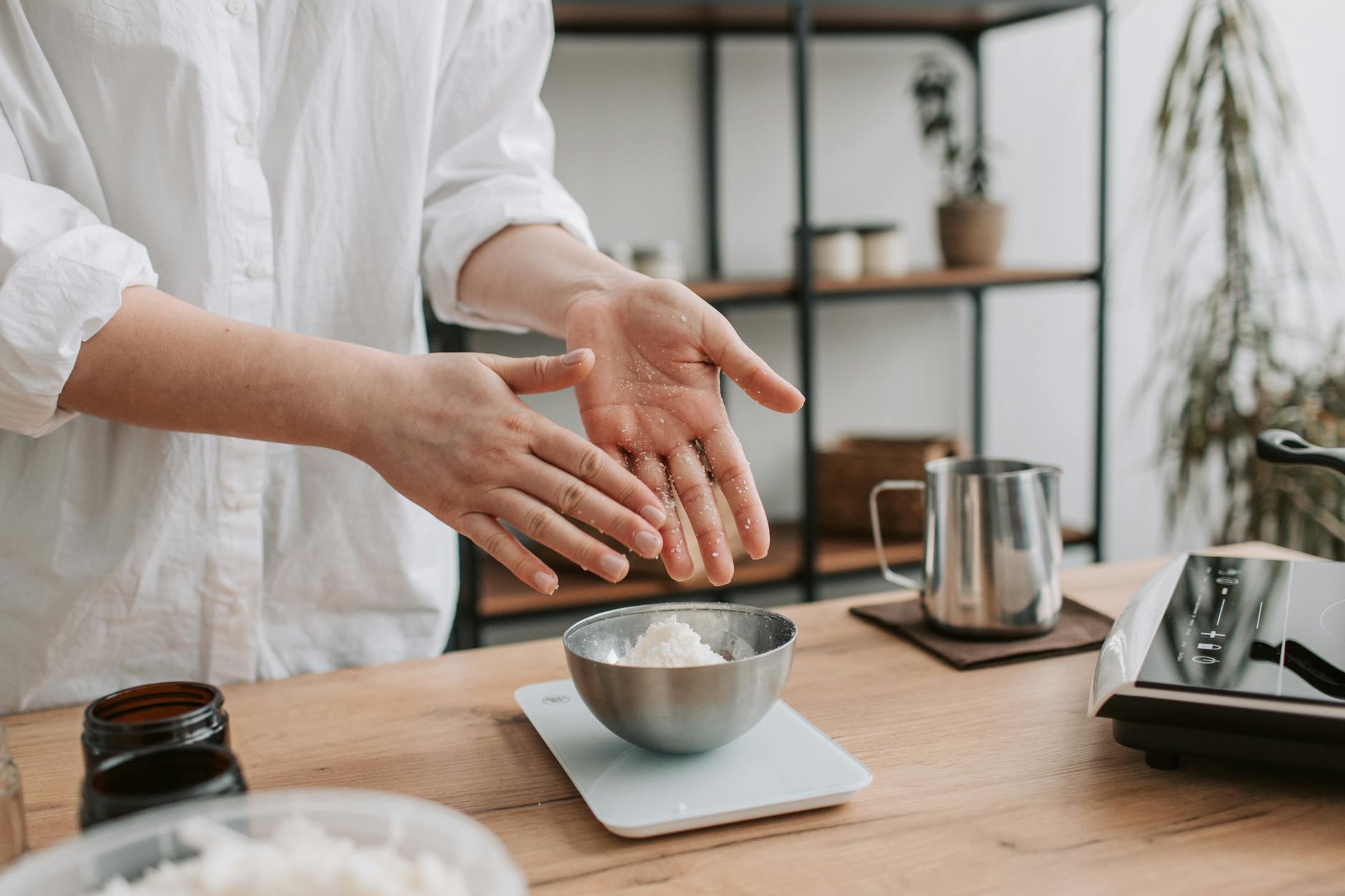
10 Best Digital Kitchen Scales for Baking: Precision, Accuracy, and Grams (Plus Top Pick)
If your bread falls flat or your cakes come out dry, the problem isn’t always the oven—it’s often the inaccurate volume measurements of cups and spoons. For true kitchen success, especially in baking, a high-precision digital kitchen scale is the essential upgrade. But not all scales are created equal.
You need reliable accuracy (ideally 0.1g increments), and you absolutely must have a Tare function for measuring multiple ingredients in one bowl.
In this guide, we review the 10 best kitchen scales on the market, focusing on the features that matter most: gram precision, ease of use, and a durable platform that guarantees your next recipe is a massive success.
Table of Contents
Top 10 Kitchen Scales on the Market
1. OXO Good Grips Stainless Steel Food Scale
The OXO Good Grips Stainless Steel Food Scale is a top choice for its durability, precision, and user-friendly design.
The pull-out display is particularly useful when weighing large items that might obscure the screen.

Features:
- Maximum capacity: 11 pounds (5 kilograms)
- Precision: 0.1 ounces (1 gram)
- Tare function
- Large, easy-to-read display
- Pull-out display for larger items
- Stainless steel platform
| Pros | Cons |
|---|---|
| Durable and easy to clean | Slightly higher price point |
| High accuracy | |
| Convenient pull-out display |
2. Escali Primo Digital Kitchen Scale
The Escali Primo Digital Kitchen Scale is a budget-friendly option that doesn’t compromise on accuracy. Its compact size makes it easy to store, and the sealed control panel prevents damage from spills.

Features:
- Maximum capacity: 11 pounds (5 kilograms)
- Precision: 0.05 ounces (1 gram)
- Tare function
- Sealed control panel
- Compact design
- Available in multiple colors
| Pros | Cons |
|---|---|
| Affordable | Basic functionality with no advanced features |
| Accurate | |
| Easy to clean and store |
3. My Weigh KD-8000 Kitchen Scale
The My Weigh KD-8000 Kitchen Scale is ideal for those who need a higher weight capacity. Its versatile unit conversions and protective cover make it a reliable and durable choice for heavy-duty kitchen tasks.

Features:
- Maximum capacity: 17 pounds (8 kilograms)
- Precision: 0.1 ounces (1 gram)
- Tare function
- Multiple unit conversions
- Large, backlit display
- Protective removable cover
| Pros | Cons |
|---|---|
| High weight capacity | Bulkier design |
| Easy-to-read display | |
| Versatile unit conversions |
4. Greater Goods Digital Kitchen Scale
The Greater Goods Digital Kitchen Scale offers a perfect balance of affordability, accuracy, and design. It’s a great option for everyday kitchen use, with a sleek appearance that complements modern kitchens.

Features:
- Maximum capacity: 11 pounds (5 kilograms)
- Precision: 0.1 ounces (1 gram)
- Tare function
- Backlit display
- Sleek, modern design
- Budget-friendly
| Pros | Cons |
|---|---|
| Affordable | Limited advanced features |
| Accurate | |
| Stylish and compact |
5. Etekcity Digital Kitchen Scale
The Etekcity Digital Kitchen Scale is known for its high precision and durability. Its stainless steel platform is easy to clean, and the versatile unit conversion options make it suitable for various kitchen tasks.

Features:
- Maximum capacity: 11 pounds (5 kilograms)
- Precision: 0.05 ounces (1 gram)
- Tare function
- Unit conversion
- Stainless steel platform
- LCD display
| Pros | Cons |
|---|---|
| High precision | Small weighing platform |
| Durable and easy to clean | |
| Versatile unit conversion |
6. Hario V60 Drip Coffee Scale and Timer
The Hario V60 Drip Coffee Scale and Timer is a must-have for coffee lovers. Its high precision and integrated timer ensure a perfect brew every time, making it a valuable addition to any kitchen.

Features:
- Maximum capacity: 4.4 pounds (2 kilograms)
- Precision: 0.1 grams
- Integrated timer
- Tare function
- Compact design
- Battery-operated
| Pros | Cons |
|---|---|
| Perfect for coffee enthusiasts | Lower weight capacity |
| High precision | |
| Integrated timer for brewing |
7. Weighmax Electronic Kitchen Scale
The Weighmax Electronic Kitchen Scale offers excellent value for its price. It features a simple design and easy-to-read display.

Features: Measures in grams and ounces; tare function; auto-off feature.
| Pros | Cons |
|---|---|
| Affordable | Basic design |
| Reliable | No advanced features. |
| User-friendly |
8. AMIR Digital Kitchen Scale
The AMIR Digital Kitchen Scale is compact and portable, making it great for small kitchens or on-the-go use. It features high-precision sensors for accurate measurements.

- Features: Measures in grams, ounces, and milliliters; tare function; backlit display.
| Pros | Cons |
|---|---|
| Portable | Small platform |
| Accurate | |
| Multifunctional |
9. Nicewell Digital Kitchen Scale
The Nicewell Digital Kitchen Scale combines style with functionality. Its sleek design and high precision make it a great addition to any kitchen.

- Features: Measures in grams, ounces, milliliters, and pounds; tare function; large backlit display.
| Pros | Cons |
|---|---|
| Stylish | Higher price point |
| Accurate | |
| Easy to clean |
10. Accuweight Digital Kitchen Scale
The Accuweight Digital Kitchen Scale is known for its high accuracy and modern design. It’s perfect for those who need precise measurements for cooking and baking.

- Features: Measures in grams, ounces, milliliters, and pounds; tare function; touch-sensitive buttons.
| Pros | Cons |
|---|---|
| Stylish | Touch buttons may be sensitive. |
| Accurate | |
| Easy to clean |
Why You Need a Kitchen Scale
Precision and Accuracy
One of the primary reasons to use a kitchen scale is precision. Measuring ingredients by weight is far more accurate than using volume measurements (like cups and tablespoons), which can vary based on how ingredients are packed.
This precision is especially crucial in baking, where the right balance of ingredients can make or break a recipe.
Consistency
Using a kitchen scale ensures that you get the same results every time you make a recipe. This consistency is essential for achieving the desired taste and texture in your dishes.
Portion Control
For those managing their diet or following specific nutritional plans, kitchen scales are invaluable for portion control.
They help you measure exact serving sizes, which is important for tracking calorie intake and ensuring balanced nutrition.
Reducing Waste
Weighing ingredients helps in reducing waste by allowing you to use only what you need. This efficiency is beneficial both for the environment and your wallet.
Types of Kitchen Scales
Digital Kitchen Scales
Digital scales are the most popular due to their accuracy and ease of use. They come with a digital display that shows the weight, usually in grams, ounces, or pounds.
Many digital scales offer additional features like tare function, unit conversion, and auto-off to save battery life.

Mechanical Kitchen Scales
Also known as analog or spring scales, these traditional scales use a spring mechanism to measure weight.
While they are not as precise as digital scales, they are durable and do not require batteries.


Balance Scales
Balance scales use a fulcrum and weights to measure ingredients. These are less common in modern kitchens but can still be found in some traditional settings. They are accurate but can be cumbersome to use.
The Accuracy Test: Why Gram Precision is Essential for Baking
Baking is chemistry — and when you’re working with flour, yeast, sugar or cocoa, precision matters more than volume. Small variations can seriously affect texture, rise, moisture content, and the final outcome of breads, cakes, cookies and pastries. That’s why a good kitchen scale, especially for bakers, must measure with gram-level accuracy.
- Why grams, not cups: Volume measurements (cups, spoons) are inconsistent — a cup of flour can vary significantly depending on how it’s scooped or packed. Weighing removes that variability.
- For serious baking, 0.1 g resolution is a game-changer: Especially for small ingredients like yeast, baking powder, salt or spices, a fine increment ensures your recipes stay balanced.
- Consistency across batches: Using the same exact weight for ingredients ensures you can repeat recipes with reliable results — essential if you bake regularly or scale recipes up/down.
👉 In short: if you bake anything more advanced than “roughly throw together ingredients”, investing in a scale with gram precision isn’t optional — it’s fundamental.
Essential Digital Features: Tare, Auto-Off, and Backlit Displays
When comparing kitchen scales, the raw measurement increment (grams or 0.1 g) matters — but so do the digital features that make daily baking easier and more reliable.
Tare Function — Non-Negotiable for Multi-Ingredient Recipes
One of the smartest features on a digital scale is the tare (zero) function. It lets you place your mixing bowl (or container) on the scale, press “tare” to reset to zero, then weigh ingredients without counting the bowl’s weight. Add flour, tare — then add sugar — all in the same bowl, with accurate results. This simplifies measuring, reduces dishes, and improves precision.
Without tare, you’re back to volume measurements or juggling multiple bowls — defeating the main benefit of weighing.
Other Useful Features
- Backlit or clear digital display: Especially important when working in low kitchen light or under large mixing bowls — ensures you can read measurements easily.
- Auto-off (power saving): Great for battery-powered scales — saves energy and extends battery life when you forget to switch off. But beware: if auto-off is too aggressive it may shut off mid-use. Kitchen Guide 101+1
- Unit conversion (g, oz, lb, ml): Handy for recipes from different countries or when converting between metric and imperial. recipe-zone.com+1
Overall, these features turn a basic scale into a baker’s tool, making weighing quick, accurate, and forgiving — exactly what you want for multiple-ingredient recipes or frequent baking sessions.
Troubleshooting: Cleaning, Durability, and Power Sources
When you rely on your kitchen scale regularly — especially for baking — its build quality, materials, and power design matter as much as its precision.
Platform Material & Cleanability
Scales built with stainless steel or smooth, sealed surfaces tend to be easier to clean and more resistant to spills, flour dust, or sticky residues than cheaper plastic models.
Glass platforms may look sleek, but they can crack if dropped; plastic can scratch or stain. Always consider how easy the scale will be to wipe down after flour, sugar or dough.
Power Source: Battery vs. Rechargeable vs. Mains
- Many digital scales rely on replaceable batteries — simple, but you risk running out in the middle of weighing.
- Rechargeable scales (USB or plug-in) avoid that worry, but depending on make/model, may add bulk or require charging downtime.
- Build quality of electronics matters: stable load cells and good calibration help maintain consistent accuracy over time. Weak or inconsistent power can cause jittery or inaccurate readings.
Durability & Lifespan
A well-built scale should maintain accuracy over years. Look for models with solid sensors, stable platforms that don’t wobble under load, and sealed or easy-to-clean surfaces. Frequent recalibration — especially with heavy use — helps maintain long-term reliability.
Analogue Scales: Style Over Functionality?
Digital kitchen scales dominate today — and for good reason — but analogue (mechanical) scales still have a nostalgic charm. If you’re driven by aesthetics or want a battery-free scale as a kitchen accent, they may appeal. However, for serious cooking or baking, there are important trade-offs.
| ✅ Pros (Analogue) | ⚠️ Cons (Analogue) |
|---|---|
| Retro, classic design that adds charm to a kitchen | Poorer accuracy and sensitivity — often only coarse increments, not suitable for precise recipes |
| No batteries required — always “ready to go” | No tare function — meaning measuring multiple ingredients in one bowl becomes cumbersome and inaccurate |
| Durable mechanical construction — less dependent on electronics | Susceptible to mechanical wear, calibration drift, and reading error (e.g. parallax error when reading the dial) |
👉 For occasional, simple cooking or as a decorative piece — analogue scales can work. But for baking, precision, consistency and ease of use, digital scales remain the smarter, more reliable choice.
Bonus: Example Digital Kitchen Scales Worth Considering
Here are a few digital scales — exemplifying the kind of features, accuracy, and build quality you should highlight when recommending products in your “Best 10” list:
- Salter Arc Digital Kitchen Scales — A solid everyday scale offering good precision, easy-to-read display, and tare functionality: ideal for most home baking needs.

- Salter Heston Blumenthal Precision Digital Kitchen Scale — A higher-end option with finer sensitivity and durable platform — a good pick if you bake frequently or want extra reliability.

- Ozeri Pronto Digital Kitchen and Food Scale — Budget-friendly yet functional, suitable for occasional baking or cooking when you want basic precision without spending much.

Features to Consider When Choosing a Kitchen Scale
| Feature | What to Look For |
|---|---|
| Accuracy and Precision | Digital scales that measure in 0.1g increments for high accuracy—ideal for baking and detailed measurements. |
| Maximum Weight Capacity | Up to 11lb (5kg) is suitable for most kitchen uses. Choose a higher capacity if weighing bulk items or large mixing bowls. |
| Tare Function | Allows you to reset to zero after placing a container, essential for adding multiple ingredients without manual calculation. |
| Unit Conversion | Ability to switch between grams, ounces, pounds, and milliliters—useful for international recipes and flexible cooking. |
| Display | A clear, easy-to-read digital display; backlit screens improve visibility in low-light environments. |
| Size and Design | Compact designs save space, while larger platforms provide stability for big items. Choose based on counter/storage availability. |
| Durability and Build Quality | Materials like stainless steel or tempered glass offer better strength and easier cleaning. |
| Additional Features | Extras like nutritional tracking, Bluetooth connectivity, or app integration can improve functionality but are optional. |
How to Choose the Best Kitchen Scale for Your Needs
Consider Your Cooking and Baking Habits
Consider how often you cook or bake and the types of recipes you typically follow. If you bake frequently, precision and high weight capacity are crucial. For everyday cooking, a basic, accurate scale will suffice.
Consider Your Kitchen Space
If you have limited counter space, opt for a compact, easy-to-store scale. Larger scales offer more stability for weighing heavier items but require more storage space.
Set a Budget
Determine your budget before shopping. While high-end scales offer advanced features, there are plenty of affordable options that provide excellent accuracy and functionality.
Tips for Using and Maintaining Your Kitchen Scale
| Maintenance Tip | Recommendation |
|---|---|
| Calibration | Regularly calibrate your scale according to the manufacturer’s instructions to maintain accuracy. |
| Cleaning | Wipe with a damp cloth after use. Avoid submerging in water or using harsh chemicals to protect surface and internal components. |
| Storage | Store in a cool, dry location. Use a protective cover if available to prevent dust and moisture from affecting sensors. |
| Battery Management | Use high-quality batteries and replace when required. Auto-off features help extend battery life—ensure it’s enabled if applicable. |
| Avoid Overloading | Do not exceed the scale’s maximum weight capacity, as it may damage the sensors and reduce accuracy. |
The Future of Kitchen Scales
Smart Kitchen Scales
The future of kitchen scales lies in smart technology. Smart kitchen scales can connect to apps via Bluetooth, providing nutritional information, recipe suggestions, and portion tracking.
These advanced features enhance the cooking experience and help users achieve their health and fitness goals.


FAQs
1. What makes a kitchen scale worth the investment?
Kitchen scales deliver precision by weight, eliminating inconsistencies caused by volume measurements—especially important in baking and portion control. They’re reliable, easy to clean, and streamline meal prep
2. Should I choose a digital or mechanical kitchen scale?
Digital scales offer faster, more precise readings and often include features like tare buttons and multiple units. Mechanical scales are sturdy and battery-free but generally less accurate
3. How accurate should a good kitchen scale be?
Aim for accuracy within 1 gram. High-quality scales—like the OXO or Escali—deliver consistent performance when tested across various weights and positions
4. What’s the benefit of a pull-out display on a scale?
Pull-out or elevated displays, such as on OXO scales, allow clear readings even with large mixing bowls in place—making them user-friendly and mess-resistant
5. Why is the tare function essential for kitchen scales?
The tare feature lets you reset the weight to zero after placing a bowl on the scale—allowing you to measure ingredients directly without doing any math or cleanup
6. Can I use a kitchen scale to measure liquids accurately?
Yes, most high-quality scales support both grams and milliliters. For liquid ingredients like water and milk, 1 g ≈ 1 ml, offering accurate conversion—though thicker liquids like honey may still need a measuring cup
7. What maintenance tips keep my kitchen scale accurate?
Keep your scale on a flat surface, calibrate occasionally with known weights (like pennies), replace batteries as needed, and avoid spills around buttons
8. How do I test my kitchen scale’s precision?
Use standard weights (e.g., 5 g calibration weights or coins that weigh 2.5 g) to see how well your scale reads both small and larger amounts. Spread weights across the platform to test consistency
9. Are expensive kitchen scales worth it?
Not necessarily. Many mid-range scales—like Escali Primo or Amazon Basics—offer excellent accuracy and durability without the premium price tag
10. Can I use a kitchen scale for coffee and baking alike?
Yes—kitchen scales work well for everyday cooking and bulk baking. However, if you’re doing precision pour-over coffee, consider a dedicated coffee scale with finer sensitivity
Conclusion
Ultimately, the best digital kitchen scale for your home is the one that removes the guesswork from your cooking. Our final advice is simple: prioritize gram accuracy (1g or better), choose a stainless steel platform for hygiene and durability, and never settle for a model without a reliable Tare function. By making this small investment, you ensure recipe consistency and significantly boost your baking results.”
Now that you have the precision locked in, speed up your prep work. If you spend hours chopping ingredients that you’ve just precisely weighed, take a look at our review of the Alligator Chopper — the ultimate tool for quick, uniform vegetable cutting.
You may also be interested in
Our Guide to the Best Can Openers
Our Place Always Pan Review (2025): Is It Worth the Price? Durability & Non-Stick Performance Test
9 Best Can Openers for Seniors
Best Salt and Pepper Grinders for Your Kitchen
Silicone Whisks for Baking: Our Guide
The Best Non-Stick Frying Pans
8 Best Kitchen Tongs: Silicone vs. Stainless Steel (And Which is Best for Air Fryers)
Best Food Thermometer for Home Cooking
The Best Measuring Spoons for Home Baking
A Guide to the Best Silicone Spatulas
Burger Flipping : Our Guide to Burger Spatulas
The Best Espresso Cups for your home
The Best Anti-Spill Desk Cup Holders
The Best Measuring Cups: Our Guide
Our Guide to The Best Espresso Glasses

Leave a Reply