
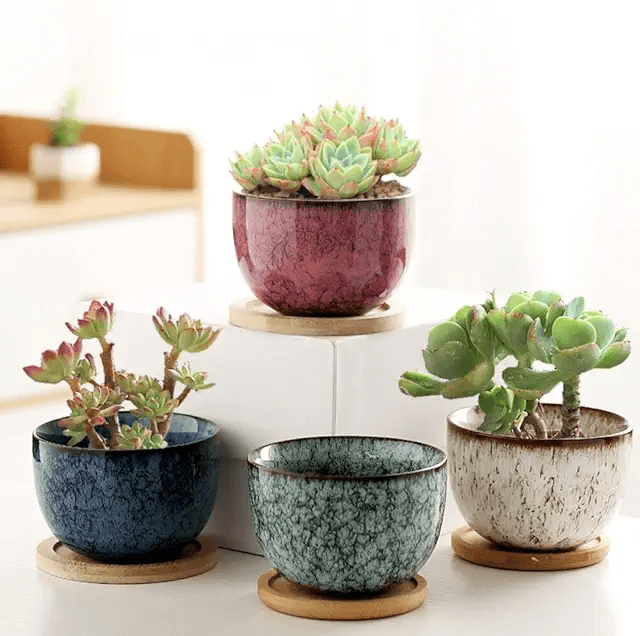
Succulent Pot Guide: Terracotta vs. Ceramic (Plus Essential Drainage Hole and Size Tips)
In this guide we discuss the best plant pots for your succulents.
Succulents have gained immense popularity in recent years, becoming the go-to choice for both seasoned gardeners and novice plant enthusiasts. These resilient plants, known for their ability to store water in their leaves, come in a myriad of shapes and sizes, adding a touch of nature to any space.
However, the key to ensuring their health and vibrancy lies not only in proper care but also in choosing the right plant pot.
In this article, we will delve into the different types of plant pots for succulents, considering factors such as material, size, and design.
We will also answer some common questions about succulent pots to help you keep your precious succulents looking their best!
Table of Contents
Succulent Pot Material Showdown: Terracotta vs. Ceramic vs. Plastic
Terracotta Pots: Classic and Breathable
Terracotta pots are a timeless choice for succulent enthusiasts. Made from fired clay, these pots are not only visually appealing but also provide a porous environment for succulents.
The porous nature of terracotta allows air and moisture to pass through, preventing waterlogged soil, a common issue for succulents.
However, it’s important to note that terracotta pots may require more frequent watering due to their ability to wick away moisture.


Why Terracotta is the Best Choice for Beginners
When comparing a terracotta pot vs. ceramic for succulents, terracotta almost always comes out on top — especially for beginners. Unglazed terracotta is naturally porous, which means it allows both air and moisture to pass through the clay walls. This porosity helps excess water evaporate quickly, preventing the soggy soil conditions that often lead to root rot — one of the most common problems in succulent care.
Ceramic pots, particularly glazed ones, tend to trap moisture inside, which can make it harder to judge when your plant needs watering. In contrast, terracotta pots promote a healthy drying cycle that closely mimics the arid environments most succulents come from.
For new plant owners still learning how much (or how little) water succulents need, terracotta provides a natural safeguard against overwatering. It’s forgiving, breathable, and even changes colour slightly as it absorbs and releases moisture — giving you a visual cue for when it’s time to water again.
Not only is terracotta functional, but its warm, rustic appearance complements the natural beauty of succulents, making it both a practical and stylish choice for any home or workspace.
Pro tip: Choose unglazed terracotta rather than a sealed version — for best results, expect to water when the soil feels dry to the touch and see the outer clay pot starting to faintly change colour as it draws moisture away.
Ceramic Pots: A Splash of Color and Style
Ceramic pots offer a wide range of colors, shapes, and sizes, making them a favorite among those looking to add a personal touch to their succulent collection. These pots are known for their durability and are often glazed, providing an added layer of protection.
While ceramic pots don’t breathe as well as terracotta, they still offer good drainage. Choosing a ceramic pot with drainage holes is crucial to prevent water accumulation at the bottom.


Plastic Pots: Lightweight and Budget-Friendly
For those on a budget or looking for lightweight options, plastic pots are a practical choice. These pots are available in various sizes and colors, catering to different preferences.
While they may lack the aesthetic appeal of terracotta or ceramic, plastic pots are durable and provide good drainage. However, it’s essential to be cautious with watering, as plastic pots don’t allow for natural evaporation through the sides like terracotta does.


The Risks of Glazed Ceramic and Plastic Pots
Many beginners wonder, can succulents live in ceramic pots without drainage? Technically, yes — but it’s risky. Glazed ceramic and plastic pots are non-porous, meaning they trap moisture inside the soil instead of allowing it to evaporate naturally. Over time, this leads to waterlogged roots and, eventually, root rot — one of the main reasons succulents fail to thrive indoors.
Without drainage holes or airflow through the pot’s walls, even a small amount of excess water can stay in the soil for days. This creates an environment that’s far too damp for drought-tolerant plants like succulents, which prefer to dry out fully between waterings.
If you love the look of ceramic planters, choose one with proper drainage holes or use it as a decorative outer cover for a smaller terracotta pot inside. This way, you get the best of both worlds — style and plant health.
Succulent Pots Comparison Table : Terracotta vs. Ceramic vs. Plastic
| Feature | Terracotta Pots | Ceramic Pots | Plastic Pots |
|---|---|---|---|
| Porosity & Drainage | ✅ Highly porous – allows excellent airflow and quick water evaporation; prevents root rot. | ⚠️ Glazed ceramic is non-porous; retains moisture unless drainage holes are present. | ❌ Non-porous – traps water easily; high risk of overwatering. |
| Best For | 🌵 Beginners and anyone prone to overwatering. | 🌿 Decorative displays or indoor arrangements (with drainage holes). | 🌼 Temporary or lightweight setups, travel, or outdoor groupings. |
| Watering Needs | Dries out quickly – needs more frequent watering. | Retains moisture longer – less frequent watering needed. | Retains moisture longest – ideal for dry indoor environments but risky for succulents. |
| Weight & Durability | Heavy and sturdy – stable but can crack if dropped. | Moderate weight – more fragile and can chip. | Lightweight – durable but may fade or warp over time. |
| Aesthetic Appeal | Rustic, natural look that complements earthy tones. | Glossy, modern, and available in many styles and colours. | Simple and functional, often less decorative. |
| Overall Rating for Succulents | ⭐ Best Choice for Beginners | ⭐⭐ Good (if drainage holes included) | ⭐ Basic – use with caution for succulents. |
Some other pot choices for your succulents
Concrete Pots: Modern and Sturdy
Concrete pots have gained popularity in contemporary gardening due to their sleek, modern appearance. These pots are not only visually appealing but also offer excellent stability.
They are less porous than terracotta, which means they retain moisture for a more extended period. Gardeners should monitor watering habits carefully to prevent overwatering, as concrete pots can lead to waterlogged soil if not managed properly.


Wooden Pots: Rustic Charm with a Natural Feel
Wooden pots add a rustic and natural element to succulent displays. They are often crafted from cedar, redwood, or other rot-resistant woods. Wooden pots provide good insulation and can help regulate soil temperature.
However, they may not be as durable as other materials, and proper drainage is crucial to prevent wood rot. Consider lining wooden pots with plastic to enhance their lifespan.


Glass and Geometric Pots: Showcasing Elegance
Glass and geometric pots are ideal for those who want to showcase their succulents as decorative pieces. These pots come in various shapes, including terrariums and geometric designs, creating a visually stunning display.
While these pots are visually appealing, they often lack drainage holes. Careful watering and well-draining soil are essential to prevent root rot, as excess water can accumulate at the bottom.

Hanging and Wall-Mounted Pots: Space-Saving Solutions
For those with limited space, hanging and wall-mounted pots offer creative solutions. These pots come in various materials, including ceramic, plastic, and metal, and can be suspended from ceilings or mounted on walls.
Proper drainage is crucial, and gardeners should ensure that water doesn’t accumulate in the pot, potentially causing harm to the succulents.


Self-Watering Pots: Convenience and Efficiency
Self-watering pots are designed to make plant care more convenient. These pots typically consist of an inner reservoir that allows the plant to draw water as needed.
While these pots reduce the frequency of watering, it’s crucial to monitor soil moisture to prevent overwatering. They are an excellent option for those with busy schedules or for individuals who may forget to water their succulents regularly.


Some Common Questions about succulent plant pots
Do succulents prefer deep or shallow pots?
Succulents generally prefer shallow pots rather than deep ones. The choice of pot depth is closely tied to the unique characteristics of succulents and their native environments.
There are several reasons why shallow pots are more suitable for succulents:
Succulents have a shallow root system
Succulents typically have shallow root systems that spread horizontally rather than growing deep into the soil. Shallow pots provide sufficient room for their roots to spread out, promoting better stability and water absorption.
Shallow succulent plant pots prevent water from pooling
Shallow pots are beneficial for succulents because they allow for efficient drainage. Succulents are adapted to arid environments and are prone to root rot if their soil remains consistently soggy. Shallow pots help prevent water from pooling at the bottom, reducing the risk of overwatering.
Easier for the soil to dry:
Succulents prefer soil that dries out relatively quickly between waterings. Shallow pots have a smaller volume of soil, and as a result, the soil tends to dry out faster compared to deeper pots. This helps mimic the natural conditions of arid regions where succulents thrive.
Shallow succulent pots allow for better aeration:
Shallow pots provide better aeration to the roots of succulents. The top layer of soil in a shallow pot is exposed to air, promoting oxygen exchange with the roots. This is crucial for preventing root suffocation and maintaining overall plant health.
Shallow succulent pots allow for better temperature regulation:
Shallow pots can help regulate soil temperature more effectively. Succulents are often exposed to extreme temperatures in their natural habitats. Shallow pots allow the soil to warm up more quickly in sunlight and cool down faster in the evening, mimicking the temperature fluctuations that many succulents are accustomed to.
Shallow succulent pots have better stability:
Succulents often have compact and sturdy forms, and they don’t require deep pots for stability. Shallow pots are generally wide, providing a broad base that helps prevent the plant from toppling over, especially if it becomes top-heavy as it grows.
Shallow succulent pots look better! :
Shallow pots can also be more aesthetically pleasing, as they allow the unique rosette or sprawling growth patterns of succulents to be fully appreciated. The shallow profile of the pot complements the visual characteristics of many succulent varieties.
While shallow pots are generally preferable for most succulents, it’s essential to consider the specific needs of individual species.
Some succulents may have slightly different preferences, and factors like soil composition, sunlight exposure, and local climate should also be taken into account when selecting the right pot for your succulents.
Here is an example of a beautiful shallow succulent bowl :

Do succulent pots need a hole in the bottom?
Yes, it is generally recommended to use pots with drainage holes for succulents. Proper drainage is crucial for the health and well-being of succulents and having drainage holes in the bottom of the pots helps to achieve this in several ways:
Prevents Waterlogging:
Succulents are adapted to arid environments and are prone to root rot if their roots are consistently sitting in waterlogged soil. Drainage holes allow excess water to escape, preventing water from accumulating at the bottom of the pot.
Aids in Soil Aeration:
Drainage holes facilitate the exchange of gases in the soil, promoting better aeration for the roots. This is essential for preventing root suffocation and promoting healthy root development.
Prevents Salinity Buildup:
If water does not have an escape route, the minerals and salts in the water can accumulate in the soil over time. This buildup can be harmful to succulents. Drainage holes allow excess salts to be flushed out with the drainage water.
Prevents Overwatering:
Succulents prefer a well-draining soil that dries out between waterings. Pots without drainage holes can lead to overwatering, as water may be retained in the bottom of the pot, creating conditions that are too moist for succulents.
Mimics Natural Conditions:
In their natural habitats, succulents often grow in soil that allows water to drain quickly. Using pots with drainage holes helps recreate these conditions, promoting a more natural environment for the plants.
While drainage holes are highly beneficial, there are ways to use decorative pots without drainage holes. You can place the succulent in a plastic or nursery pot with drainage holes and then place that pot inside the decorative container. This method allows you to enjoy the aesthetics of the decorative pot while still providing the necessary drainage for the succulent.
Here is an example of an attractive set of succulent plant pots with drainage and saucers

Do succulents outgrow their pots?
Yes, succulents can outgrow their pots over time.
The rate at which succulents grow and the need for repotting depend on various factors, including the species of succulent, its growth habit, environmental conditions and the size of the pot.
Here are some indicators that your succulent may have outgrown its current pot:
Root Crowding:
One of the primary signs that a succulent has outgrown its pot is when you observe visible root crowding. If the roots start to encircle the pot or become tightly packed, it indicates that the plant has exhausted the available space.
Slow Growth or Stunted Appearance:
Succulents that have insufficient space for root expansion may exhibit slow growth or a stunted appearance. This is because the limited root space hinders the plant’s ability to access nutrients and water.
Frequent Watering Requirements:
If you find yourself needing to water the succulent more frequently than usual, it may be an indication that the roots have filled the pot, leaving less room for water retention. This can result in the soil drying out more quickly.
Tipping or Tilting:
As succulents grow, they can become top-heavy. If your succulent starts tipping or tilting to one side, it may be an indication that the root system has become unbalanced or is no longer providing sufficient support.
Above-Ground Growth:
Succulents that are outgrowing their pots may also exhibit above-ground signs, such as the plant spilling over the edges of the container or producing new shoots or offsets that seem crowded.
When should you re-pot your succulent?
Here are some guidelines for repotting succulents:
Choose the Right Pot Size:
Select a new pot that is 1-2 inches larger in diameter than the current pot. This provides enough space for the succulent’s roots to expand without being excessive.
Use Well-Draining Soil:
Opt for a well-draining succulent or cactus mix. Good drainage is essential for preventing overwatering and root rot.
Inspect and Trim Roots:
When repotting, gently remove the succulent from its current pot and inspect the roots. If they are circling or densely packed, you can trim them to encourage healthier growth. Allow the cut ends to callus before planting.
Repot During the Growing Season:
The ideal time to repot succulents is during their active growing season, typically in spring or early summer. This allows the plant to recover and establish itself in the new container.
Water Carefully After Repotting:
After repotting, allow the succulent to settle into its new home before watering. This helps prevent issues like overwatering or root damage.
Remember that not all succulents grow at the same rate, and some may take longer to outgrow their pots than others. Regularly monitoring your succulents and providing them with adequate space as needed contributes to their overall health and vitality.
This is a great succulent potting mix to use when repotting :

What type of pot is best for succulents?
The best pots for succulents are those made of materials that provide good drainage and airflow, such as terracotta or ceramic.
These materials are porous, allowing excess moisture to evaporate, which helps prevent root rot—a common issue for succulents.
Additionally, pots with drainage holes at the bottom are essential, as they allow excess water to escape, reducing the risk of overwatering.
Do succulents need pots with drainage holes?
Yes, succulents thrive in pots with drainage holes. Drainage holes are crucial because they allow excess water to escape, preventing the soil from becoming waterlogged.
Succulents are adapted to dry environments and can suffer from root rot if their roots sit in water for too long. If you use a pot without drainage holes, it’s important to add a layer of gravel or stones at the bottom and water the plant sparingly.
Can I plant succulents in glass containers?
While you can plant succulents in glass containers, such as terrariums, it’s important to be mindful of the lack of drainage. In glass containers without drainage holes, it’s easy to overwater the plants, which can lead to root rot. To mitigate this, you should use a well-draining soil mix, water sparingly, and consider adding a layer of gravel at the bottom to help manage excess moisture.
How large should a succulent pot be?
A succulent pot should be slightly larger than the root ball of the plant—typically about 10-15% wider. If the pot is too large, the excess soil can retain moisture for too long, leading to root rot.
On the other hand, a pot that’s too small may restrict root growth. A good rule of thumb is to choose a pot that allows about an inch of space between the edge of the pot and the plant.
Can succulents grow in plastic pots?
Yes, succulents can grow in plastic pots, but there are some considerations to keep in mind. Plastic pots are lightweight, durable, and retain moisture longer than terracotta or ceramic pots.
While this can be beneficial in very dry climates, it can also increase the risk of overwatering. To compensate, make sure the plastic pot has drainage holes and use a well-draining soil mix.
Are self-watering pots good for succulents?
Self-watering pots are generally not recommended for succulents because they retain moisture, which can lead to overwatering and root rot.
Succulents prefer dry conditions, so it’s better to use pots that allow you to control the watering manually.
If you do choose to use a self-watering pot, be extremely cautious with the water reservoir and monitor the soil moisture closely.
What is the best soil for succulent pots?
The best soil for succulent pots is a well-draining mix that mimics the natural arid environment of succulents.
Commercial cactus or succulent soil mixes are ideal because they typically contain a combination of sand, perlite, and organic material, which helps to prevent water retention.
You can also make your own mix by combining potting soil with sand or perlite to improve drainage.
Can I use decorative pots without drainage holes for succulents?
While it’s possible to use decorative pots without drainage holes, it requires careful watering to avoid overwatering.
You can use a technique called “double potting,” where you place the succulent in a pot with drainage holes and then place that pot inside the decorative one.
This way, you can still have the aesthetic appeal of the decorative pot while ensuring proper drainage for the plant.
What are the signs that my succulent needs a bigger pot?
Signs that your succulent needs a bigger pot include the plant becoming top-heavy, roots growing out of the drainage holes, or the plant looking overcrowded in its current pot.
Additionally, if you notice that the soil is drying out too quickly, it may indicate that the plant has outgrown its pot and needs more room for its roots to expand.
Is it okay to keep succulents in their nursery pots?
Succulents can be kept in their nursery pots for a short period, but it’s generally better to repot them into a more permanent container with better drainage and a more suitable soil mix.
Nursery pots are often made of thin plastic and may not provide the best conditions for long-term growth. When repotting, choose a pot that is only slightly larger to avoid excess soil, which can hold too much moisture.
Can I plant multiple succulents in one pot?
Yes, planting multiple succulents in one pot can create an attractive arrangement. When doing so, choose succulents with similar water and light requirements to ensure they thrive together.
Make sure the pot is wide enough to allow each plant to grow and has adequate drainage. It’s also important to space the plants apart to give them room to grow and prevent overcrowding.
What are the benefits of using terracotta pots for succulents?
Terracotta pots are excellent for succulents because they are porous and allow moisture to evaporate more quickly from the soil. This helps prevent overwatering, which is one of the most common problems with succulents.
Terracotta pots are also heavy enough to prevent top-heavy succulents from tipping over and they provide a rustic, natural look that complements succulent arrangements.
Can I use hanging pots for succulents?
Hanging pots are a great option for trailing succulents like String of Pearls or Burro’s Tail. When using hanging pots, ensure they have drainage holes and are placed in a location where the plants receive adequate light.
Be mindful of the watering needs, as hanging pots can dry out faster than those on the ground due to increased air circulation.
Should I use a saucer under my succulent pot?
Using a saucer under your succulent pot can help catch excess water and prevent it from spilling onto your furniture. However, it’s important to empty the saucer regularly to prevent the pot from sitting in water, which can lead to root rot.
If you notice water accumulating in the saucer after watering, it’s a sign that you may be overwatering.
Can succulents grow in metal pots?
Succulents can grow in metal pots, but there are a few considerations. Metal can heat up quickly in direct sunlight, which can cause the soil to dry out faster and potentially damage the roots.
If you choose a metal pot, place it in a location with indirect light and monitor the soil moisture closely. Additionally, ensure the pot has drainage holes or consider using it as an outer decorative pot with an inner pot that has proper drainage.
Are concrete pots good for succulents?
Concrete pots are good for succulents because they are durable, heavy, and provide excellent stability for larger plants. They are also porous, which helps with moisture evaporation.
However, concrete pots can be heavy and may not be ideal for shelves or surfaces that can’t support the weight. Additionally, they may need to be sealed to prevent them from absorbing too much water over time.
How do I clean succulent pots before repotting?
To clean succulent pots before repotting, remove any old soil and rinse the pot thoroughly with water.
For deeper cleaning, especially if you’ve had issues with pests or mold, soak the pot in a solution of 1 part bleach to 9 parts water for about 10 minutes, then rinse well and let it air dry completely before using it again.
Can I use plastic pots for outdoor succulents?
Plastic pots can be used for outdoor succulents, but they have some drawbacks. While plastic pots are lightweight and retain moisture longer, they can become brittle and crack in harsh weather conditions.
Additionally, they may not provide the same level of breathability as terracotta or ceramic pots. If using plastic pots outdoors, place them in a shaded area and ensure they have adequate drainage to prevent water accumulation.
What are some stylish pot options for indoor succulents?
Stylish pot options for indoor succulents include geometric ceramic pots, minimalist concrete pots, colorful glazed pots, and vintage-inspired terracotta pots. You can also consider pots with unique textures or patterns, or decorative planters with metal or wooden stands.
When choosing a pot, balance aesthetics with functionality, ensuring it has proper drainage and suits the needs of your specific succulent.
Conclusion
Choosing the right plant pot for succulents involves considering various factors, including material, size and design preferences.
Each type of pot has its advantages and considerations, and understanding the needs of succulents is paramount to their overall health and longevity.
Whether you opt for the classic terracotta, the vibrant ceramic, or the modern concrete, finding the perfect pot for your succulents is a delightful journey that enhances both the aesthetic appeal and well-being of these resilient plants.
You can read more about the best varieties of succulents for your home here : The Best Varieties of Succulents for Your Home
You may also be interested in
Best Varieties of Succulents for Your Home
Top Five Easiest Bonsai Trees for Beginners
The Easiest Bonsai Tree for Beginners
What Are The Best Indoor Draping Plants?
How to Decorate Your House with Rugs – a comprehensive guide
A Comparison of the Kärcher Window Vacs – which is best?
How to Clean Your Microwave: Tips and Techniques for a Spotless Appliance
Selecting the Perfect Aquarium for Your Small Apartment
The Best Easy-to-Read Wall Clocks for Your Home
How to make your bathroom smell like a spa: Aromatherapy Tips and Techniques
The Best Modern Wall Clocks: Minimalist, Retro, Tech-Infused, Statement & Artistic designs

Leave a Reply